




11/20/2026
By Evangelist Peter Gee, editor-in-chief, Christianity News Daily
The Lord Jesus Christ did not flatter the church at Laodicea; He exposed its true condition. Though the congregation saw itself as prosperous and self-sufficient, Christ—who sees the heart—declared it “wretched, miserable, poor, blind, and naked” (Revelation 3:17, NKJV). No amount of buildings, budgets, influence, or reputation could hide its spiritual poverty. The church possessed material wealth but lacked spiritual vitality.
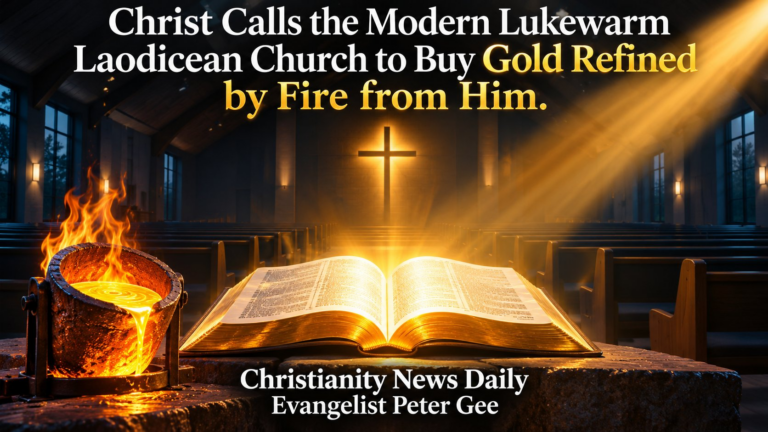
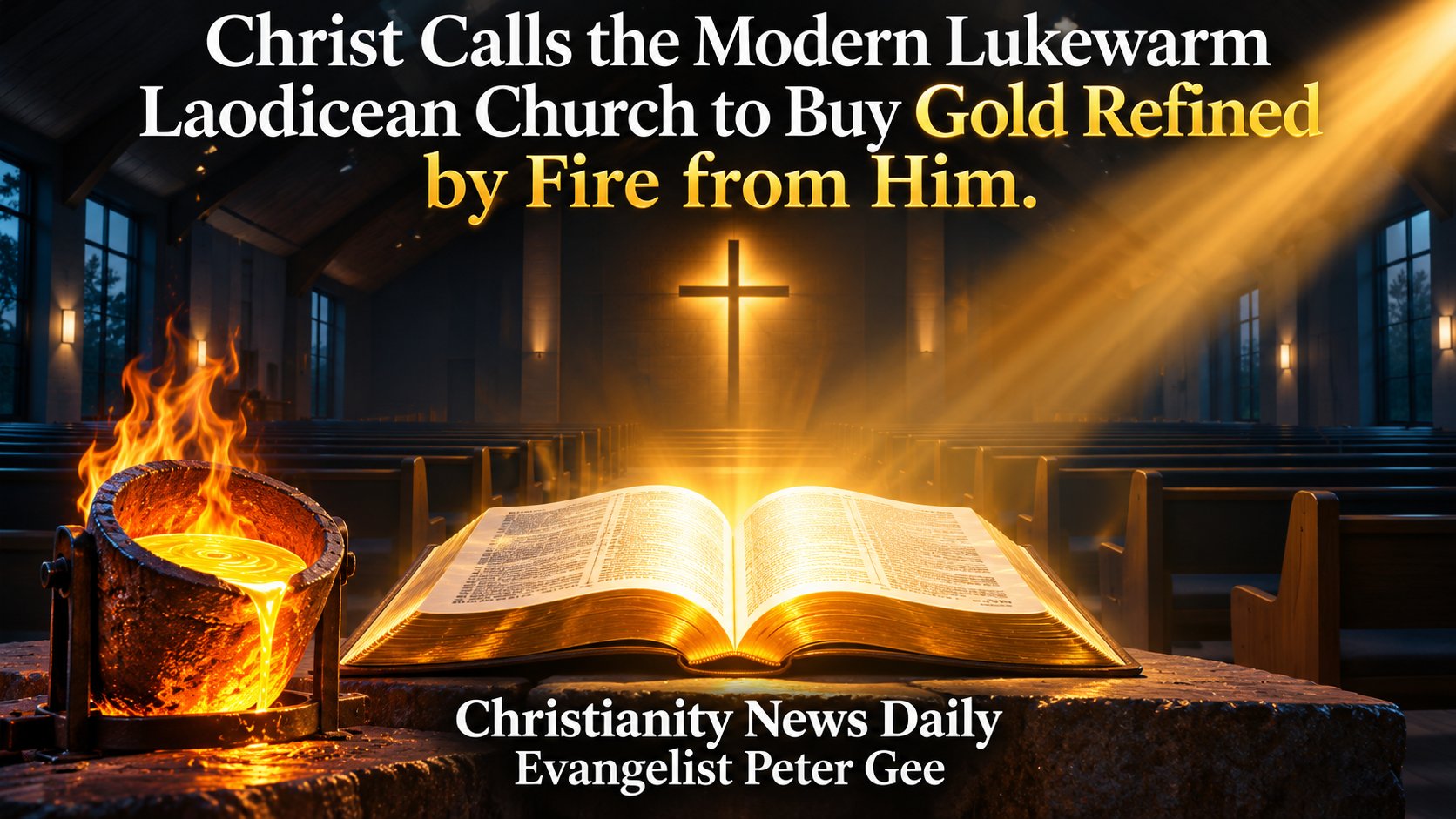
Christ did not instruct Laodicea to launch new initiatives or improve its image. Instead, He called the church to Himself: “I counsel you to buy from Me gold refined in the fire, that you may be rich” (Revelation 3:18). Those who claimed self-sufficiency were told to receive what only He could provide: true riches, clean garments, and sight. He rebuked them, loved them, and commanded them to repent.
This message extends beyond Laodicea. Every generation of believers must consider whether it trusts Christ or relies on comfort, success, and reputation. A church can preach about Jesus yet prioritize self-protection, sing about the cross while avoiding sacrifice, and speak of blessing while neglecting those Christ came to save. Laodicea reminds us that religious activity and material success do not guarantee spiritual health.
This warning is also an invitation. Christ continues to call. His gold is not earned by suffering, purchased with money, or achieved by human effort. It is received by those who turn from self-sufficiency and trust His grace. The refining fire tests and purifies faith; it does not purchase salvation. The real question is whether we will admit our need and come to the Lord, who alone can make us truly rich.
A church that mistook comfort for spiritual health
Revelation 3:14–22 records Christ’s message to the church of the Laodiceans. He identifies Himself as “the Amen, the Faithful and True Witness, the Beginning of the creation of God” (verse 14). His testimony is final and trustworthy. He does not assess a church by its own report, by public approval, or by the appearance of success. He knows its works.
The church was neither cold nor hot. Christ said, “I could wish you were cold or hot” (verse 15). Its lukewarmness, illustrated by the region’s water supply, was displeasing. The congregation was somewhat indifferent to Christ. They spoke the language of faith but lacked wholehearted dependence and obedience.
Not every believer who experiences fatigue, grief, struggle, or doubt is Laodicean. Scripture allows for weakness, lament, repentance, and restoration. Peter denied Christ and was restored; the Psalms express anguish. The church is called to support the weak and restore those caught in sin with gentleness (Galatians 6:1). Laodicea’s issue was settled complacency: it considered itself healthy while rejecting Christ’s assessment.
The church claimed, “I am rich, have become wealthy, and have need of nothing” (Revelation 3:17). Its confidence led to blindness, measuring itself by possessions and achievements rather than by its need for Christ. This danger arises whenever churches treat resources or influence as signs of God’s favor. These can be useful as stewardship but become idols when they replace dependence on Christ and obedience to His Word.
Material comfort is not sinful in itself. Scripture describes godly people with resources and instructs believers to work honestly, provide for their families, give generously, and care for the poor. The danger lies in loving and trusting riches, believing they can secure the soul. Paul warns, “The love of money is a root of all kinds of evil” (1 Timothy 6:10), and Christ asks, “What will it profit a man if he gains the whole world and loses his soul?” (Mark 8:36). Laodicea’s tragedy was not wealth itself, but that wealth convinced it of self-sufficiency.
The Lord’s counsel is an invitation to receive
Jesus’s command to “buy from Me” does not imply salvation can be purchased. Scripture does not teach that forgiveness is earned by money, suffering, works, or merit. Isaiah’s invitation is clear: “Ho! Everyone who thirsts, Come to the waters; And you who have no money, Come, buy and eat” (Isaiah 55:1). The language of buying refers to receiving what God provides, not paying an equivalent price.
This truth is central to the gospel: we are saved by grace through faith, not by our works (Ephesians 2:8–9). Christ paid the ransom with His blood (1 Peter 1:18–19). The sinner comes empty-handed, confessing guilt and trusting in Christ’s death and resurrection. Repentance is not payment, and faith is not a wage; both turn us from self-rule to the all-sufficient Savior.
What must Laodicea give up? Its claim of self-sufficiency, false assurance, love of ease over obedience, self-made righteousness, worldly measures of success, and refusal to accept correction. To “buy” from Christ is to receive Him on His terms: with humility, faith, repentance, and a willingness to follow His lead.
Jesus presents three images in Revelation 3:18: gold refined in fire for true riches, white garments to cover shame, and eye salve for sight. These address the church’s poverty, nakedness, and blindness. Christ is not offering self-improvement but calling a spiritually sick congregation to the only Physician who can restore it.
The white garments represent the righteousness and purity found in Christ, not self-cleansing by moral effort. The eye salve signifies the need for spiritual sight, which pride cannot produce. The gold represents what is truly valuable before God. The church needs Christ’s righteousness, truth, life, and refining work together.
Peter explains why tested faith is more precious than gold.
The link between Revelation 3 and 1 Peter 1 is significant. Jesus offers gold refined by fire, while Peter describes faith tested through trials. He writes that, though Christians face various trials, “the genuineness of your faith, being much more precious than gold that perishes, though it is tested by fire,” will result in praise, honor, and glory at Christ’s revelation (1 Peter 1:6–7).
Peter does not claim that pain saves or that every hardship produces holiness. Trials can reveal bitterness, fear, pride, or unbelief, but they can also lead believers to renewed dependence on God. Suffering itself has no magical power; rather, God uses trials to test faith, teach endurance, and shape His people to Christ. The fire reveals what is genuine and removes what cannot last.
Faith is precious because its object is Jesus Christ. Peter says believers love the Lord they have not seen and rejoice in Him with inexpressible joy (1 Peter 1:8). This faith rests on the risen Savior and the hope secured by His resurrection (verses 3–5). It does not depend on comfortable circumstances but on God’s promise to keep His people and reserve their inheritance in heaven.
It is important to distinguish that Christ’s gold is not a reward for enduring pain. Christians are not saved by suffering but through faith in Christ. This faith is tested in a world of sorrow, temptation, and opposition. Trials do not add to the cross’s sufficiency; they reveal whether our hope is anchored in Christ or in personal comfort.
When hardship arises, the church should support those who suffer and refrain from promising instant deliverance where Scripture does not. We are called to weep with those who weep, bear burdens, pray, offer practical help, and share God’s comfort. At the same time, we must not teach that a pain-free life is the believer’s highest blessing. Jesus suffered and calls His disciples to follow Him in self-denial.
The cross contradicts a gospel of ease.
Jesus said, “If anyone desires to come after Me, let him deny himself, and take up his cross daily, and follow Me” (Luke 9:23). The cross is not a symbol of self-fulfillment but of dying to self-rule and pledging allegiance to Christ. Following Jesus means surrendering the right to make our desires the final authority.
This does not mean seeking suffering for its own sake, refusing medicine, ignoring wise counsel, or passively accepting abuse. Scripture calls us to act wisely, protect the vulnerable, pursue peace, and use lawful means to resist evil. The cross means obedience to Christ is worth more than comfort, approval, or worldly gain. Obedience may bring loss, require difficult confession, costly generosity, refusal to join in sin, or patient faithfulness without recognition.
The broad way Jesus described is appealing because it demands little. “Wide is the gate and broad is the way that leads to destruction,” He warned, while the difficult way leads to life (Matthew 7:13–14). Hardship does not earn eternal life; rather, many follow the easy path, while true discipleship requires submission to God. A church can adopt the broad way while retaining Christian language, reshaping the gospel to bless ambition, excuse sin, and keep people comfortable.
This danger appears in prosperity preaching that treats God as a means to financial gain. The “name it and claim it” message centers on personal desires, equates material increase with faith, and downplays the suffering and self-denial Jesus taught. It turns prayer into a tool for personal gain and the gospel into a promise of advancement. This is not the message of Christ crucified.
The New Testament does not condemn all prosperous Christians, nor does it claim poverty is a virtue in itself. It condemns greed, favoritism toward the rich, exploitation, and boasting in wealth as security. Paul instructs the rich to be humble, generous, and ready to share (1 Timothy 6:17–19). The key issue is the heart’s allegiance: do we steward money, or does it control us? Do we seek the kingdom first, or use religious language to justify comfort?
Seek the kingdom and trust the Father’s care.
Christ’s command in Matthew 6:33 is both a priority and a promise: “Seek first the kingdom of God and His righteousness, and all these things shall be added to you.” Jesus addresses anxiety about daily needs, urging His disciples not to live as if the Father is unaware. They are to seek God’s kingdom and righteousness, trusting Him to provide.
This promise is not a guarantee of riches, luxury, or a life free from hardship. Jesus’s followers may experience persecution, scarcity, illness, grief, and loss. Paul knew both abundance and need and learned contentment through Christ (Philippians 4:11–13). The Father’s provision is real, but Scripture does not promise every faithful believer will receive all they desire or avoid hardship. The promise frees us from anxiety, not to promote a prosperity formula.
The kingdom is sufficient because the King is sufficient. He knows our needs and provides daily bread, strength to obey, community, the Spirit’s comfort, and the hope of eternal life. Provision may come through work, generosity, or sustaining us in difficult seasons. Our confidence rests in His wisdom and care, not in controlling outcomes.
Seeking the kingdom first transforms the church’s mission. Jesus commissioned His disciples to make disciples of all nations, baptizing and teaching them to obey His commands (Matthew 28:19–20). The gospel is not a promise of wealth, but the proclamation that Christ died for our sins, was buried, and rose again (1 Corinthians 15:1–4). It calls all to repent and believe and sends the church to proclaim Christ, make disciples, serve neighbors, and care for the vulnerable.
If a congregation prioritizes marketing material success over repentance, holiness, evangelism, and teaching Scripture, it must examine its priorities. Media, buildings, technology, and fundraising are not inherently wrong but must serve the mission. The key question is whether our resources help people hear and obey the gospel, or if the church has become a platform for promising what only Christ can give.
The refining work begins with Christ’s rebuke.
Revelation 3:19 explains Christ’s strong words: “As many as I love, I rebuke and chasten. Therefore be zealous and repent.” His rebuke is not a sign of indifference but of care—He confronts the church to prevent self-deception from leading to ruin. His love does not allow the lukewarm to remain comfortable in their error.
Repentance is more than regret or public statements; it is turning from sin and self-rule to God. For a complacent church, this may mean admitting that attendance, income, or reputation have replaced spiritual fruit; ending teachings that promise riches as a right; restoring the cross and resurrection to central preaching; discipling believers to obey Christ; and treating the poor as neighbors, not props.
For individuals, repentance may start with honest questions: What am I withholding from the Lord? Have I delayed obedience to Christ’s commands because of potential cost? Have I relied on financial security, public identity, ministry platforms, or comfort for security that belongs to God? Have I sought Christ’s blessing for my plans more than I have submitted them to Him?
We must ask these questions without assuming we know the hidden state of others. Scripture does not quantify how many have rejected Christ’s gold, but offers a searching warning and a call to self-examination. Jesus’s words are not permission to judge every church we dislike, but a call to listen to the Spirit, starting with our hearts.
The letter concludes with an image of mercy: Christ stands at the door and knocks (Revelation 3:20). Though often applied to unbelievers, Jesus addresses a church here. The congregation that marginalized Him receives renewed fellowship. “If anyone hears My voice and opens the door,” He promises to come in and dine with them. The call is both personal and communal: hear, open, and return to fellowship with the Lord.
Christ’s promise to the overcomer points to the throne (verse 21). The Lord who rebukes also invites the church to share in His victory. He does not ask His people to refine themselves apart from Him; instead, He calls them to repent, receive His gifts, endure in faith, and remain close to the Savior who overcame.
What the church must recover
A church awakened by Christ will regain a clear understanding of sin and grace. It will not minimize sin for comfort or present human effort as the solution. It will proclaim that all have sinned, that Christ bore sin on the cross, that He rose bodily, and that forgiveness and new life come through repentance and faith. Believers are taught to walk in holiness because they belong to Christ, not to earn their place.
It will restore dependence on Scripture. Trends, branding, and public opinion cannot replace the voice of the Faithful and True Witness. The church must teach the whole counsel of God, addressing greed, hypocrisy, immorality, partiality, false teaching, and neglect of the lost, as well as mercy, patience, generosity, forgiveness, and hope. Truth without love is harsh; love without truth is deceptive. Christ’s words unite both.
It will regain a burden for souls. The church is not called to promote materialism in Christian terms but to proclaim the gospel and make disciples. This includes feeding the hungry and caring for those in need, but compassion does not end with temporary relief. We serve others because they bear God’s image and Christ commands love, and we do so while also sharing the gospel. Practical mercy and gospel proclamation go together.
It will recover contentment and generosity. Believers can work, plan, save, and build responsibly without letting money become their master. Those with more can give freely, support ministry, help families in need, and use resources for good. Those with less are not spiritually inferior. The church’s shared life should show that our treasure is in heaven and every gift is entrusted by God.
It will regain courage in trials. Suffering should not surprise us or be used to accuse believers of lacking faith. Churches should not hide the cost of discipleship behind promises of immediate success. The Lord can deliver from trials, and we should ask Him to do so. When He leads us through them, He remains faithful. Tested faith is precious because it looks to Christ, and the believer’s hope endures.
The invitation remains open.
Laodicea faced a serious problem, but Christ’s final word was that repentance was possible. He called the church to be zealous and repent, offering true riches, cleansing, sight, restored fellowship, and a share in His victory. His words still challenge every church that claims self-sufficiency while living without dependence on Him.
Our response must begin with honest self-examination. We should ask if our confidence is in Christ’s finished work or our own success. Does our gospel call sinners to repentance and faith, or does it promote religious ambition? Do we carry the cross daily, care for the lost, and trust the Father as we seek His kingdom?
Then we must come to Christ. His grace cannot be bought with money, suffering, or good deeds. We must reject self-sufficiency, confess sin, believe the gospel, receive His righteousness, and follow Him by His power. When trials reveal our weakness, we cling to the Savior whose grace is enough. When comfort tempts us to drift, we ask Him to renew our zeal.
The church does not need a more impressive imitation of riches. It needs the gold only Christ provides: genuine faith, refined and proven through reliance on Him. It needs the white garments of His righteousness and the sight to recognize its true condition. The church must hear the Lord’s rebuke as love and respond with repentance.
The narrow way may be difficult, but Christ walks with His people. The cross is costly but leads to life. The fire may test faith but cannot destroy the inheritance God preserves. The Lord who calls the lukewarm church to return remains the faithful Savior who invites the needy. Let the church stop boasting of self-sufficiency, come to Christ, receive what it cannot earn, and seek first the kingdom of God.